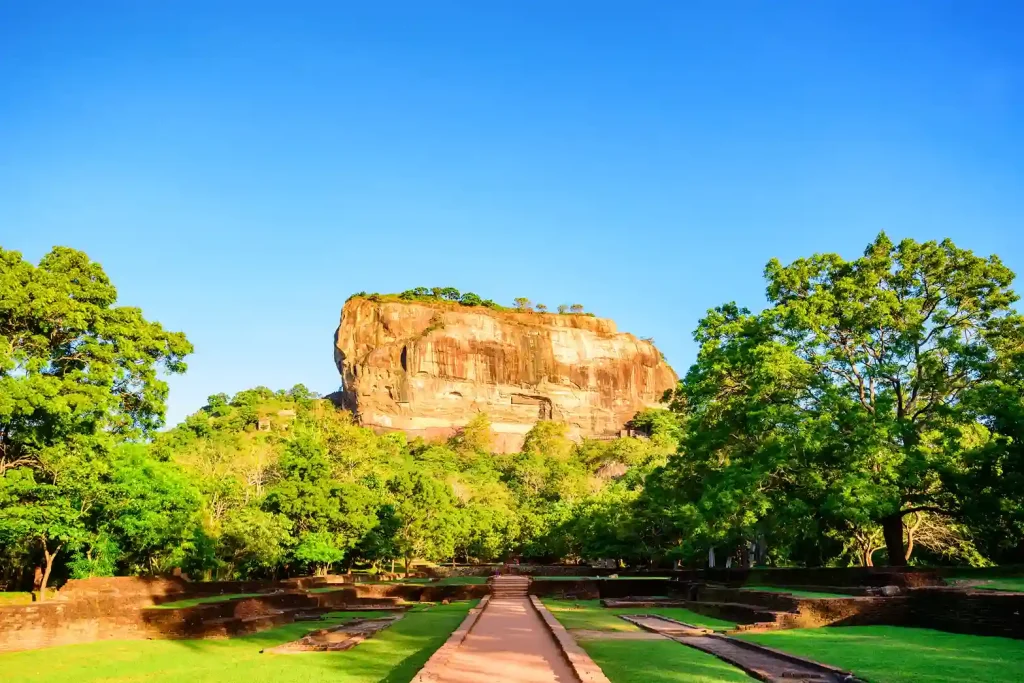
Sigiriya, often referred to as the “Eighth Wonder of the World,” is one of Sri Lanka’s most iconic and awe-inspiring landmarks. Rising 200 meters above the surrounding jungle, this massive rock fortress is a testament to the engineering and artistic brilliance of ancient Sri Lankan civilization. A UNESCO World Heritage Site, Sigiriya stands as a symbol of the country’s rich cultural heritage, blending history, art, and nature in a spectacular fusion.
Built by King Kashyapa in the 5th century AD, Sigiriya is not just an archaeological marvel but also an enduring symbol of power, beauty, and ingenuity. Visitors to Sigiriya are transported back in time, exploring ancient palaces, royal gardens, and some of the finest frescoes and water features ever created by ancient engineers.
A Rich History and Stunning Architecture
Sigiriya was chosen by King Kashyapa to serve as his royal palace after he usurped the throne from his father, King Dhatusena. Seeking to protect himself from a rebellion by his brother, who was exiled, Kashyapa transformed this massive rock into an impenetrable fortress. The fortress was strategically positioned with spectacular views of the surrounding jungle and vast plains, providing a natural defense against invaders.
The rock itself is composed of granite, which served as a solid base for the king’s palace and the expansive royal gardens. Kashyapa’s reign was marked by a desire for grandeur, and the fortress he created was designed not only as a military stronghold but also as a symbol of his absolute power and divine right to rule.
Today, Sigiriya is an architectural wonder, showcasing advanced engineering techniques, including sophisticated water gardens, hydraulic systems, and clever use of natural rock formations. The site’s combination of human ingenuity and the natural landscape creates an unforgettable visual experience.
Climbing the Lion Rock: A Journey through History
The journey to the summit of Sigiriya is as much an adventure as it is a historical exploration. Visitors climb a series of steep, well-maintained staircases that wind their way up the rock, offering ever-changing views of the surrounding landscape. The climb to the top is divided into several stages, each showcasing unique features and providing glimpses into the past.
The Royal Gardens
The base of Sigiriya is home to the ancient Royal Gardens, a testament to the advanced landscaping skills of ancient Sri Lankan engineers. These gardens are laid out in a series of concentric, symmetrical patterns, and include water fountains, pools, and reflecting ponds. The hydraulic systems used to feed these gardens were highly sophisticated for their time, with the water diverted from nearby rivers through intricate channels and sluices.
The Mirror Wall
As visitors ascend the rock, one of the first key features they encounter is the Mirror Wall, a polished stone wall that was once so smooth and shiny that King Kashyapa could see his reflection in it. The Mirror Wall is adorned with inscriptions in ancient Sinhalese script, which offer fascinating insights into the thoughts of visitors who journeyed to Sigiriya centuries ago. These writings were left by royal guests, pilgrims, and even travelers from other lands, adding to the historical allure of the site.
Sigiriya Frescoes: The Celestial Maidens
One of the most famous aspects of Sigiriya is the Sigiriya Frescoes, a series of vivid and well-preserved murals that depict celestial maidens, known as the Sigiriya Damsels. These graceful and beautiful figures are believed to represent the apsaras (divine nymphs) who were thought to reside in the heavenly realms. The frescoes are an excellent example of Sri Lanka’s ancient artistic and cultural achievements, and the bright colors and fine details of the paintings remain striking to this day. It’s thought that these paintings were originally part of a larger gallery, and their delicate beauty continues to captivate visitors.
The Lion’s Paws and the Final Ascent
As visitors continue their climb up the rock, they are greeted by the Lion’s Paws, an imposing and symbolic structure that marks the halfway point. The giant lion’s paws are the only remaining feature of the massive lion statue that once stood here, serving as an entrance to the final ascent to the summit. The lion’s mouth, which once formed the gateway to the top, has long since disappeared, but the lion’s paws remain as a testament to the grandeur of the original structure.
The final stretch to the top is not for the faint of heart, as visitors must ascend a narrow iron staircase that climbs the sheer rock face. The climb, however, rewards those who make the effort with a panoramic view unlike any other.
The Summit: A Glimpse into Royal Life
At the summit of Sigiriya, visitors are greeted with the remains of an ancient palace and several other important features, including royal gardens and a swimming pool. These structures provide a window into the luxurious life that the king and his court would have enjoyed during the height of Sigiriya’s splendor.
- The Palace: Although much of the palace has eroded over time, the foundations and structural outlines are still visible. The summit offers a commanding view of the surrounding countryside, providing a sense of the strategic importance of the fortress.
- Royal Gardens: The gardens at the top were a continuation of the luxurious designs seen below, with a combination of pools and fountains offering a tranquil atmosphere. The remnants of these gardens give visitors a glimpse into the lavish lifestyle of the ancient royals.
- The Swimming Pool: One of the most fascinating features on the summit is the ancient swimming pool, which was carved into the rock and provided the king and his court with a cool retreat from the heat of the day. The pool still retains its charm, and visitors can imagine what it must have been like to relax in this luxurious spot with a view over the verdant jungle below.
The Best Time to Visit Sigiriya
To make the most of your visit to Sigiriya, it’s advisable to arrive either early in the morning or later in the afternoon. The heat can become intense during midday, especially during the warmer months (March to September), so early risers can enjoy a more comfortable climb and avoid the crowds. The cool mornings and evenings also provide the best lighting for photographs, capturing the majesty of Sigiriya from a variety of angles.
Conclusion: Sigiriya – A Must-Visit for History, Nature, and Adventure Lovers
Sigiriya is more than just a historical site; it’s a living monument to Sri Lanka’s rich cultural and architectural heritage. Whether you’re a history enthusiast, nature lover, or adventure seeker, Sigiriya offers something for everyone. Its awe-inspiring views, intricate frescoes, stunning gardens, and historical significance make it one of the most important landmarks in Sri Lanka.
As a UNESCO World Heritage Site, Sigiriya continues to be a draw for visitors from around the world, offering a once-in-a-lifetime opportunity to walk in the footsteps of ancient kings and explore one of the most beautiful and mysterious sites in the world. A visit to Sigiriya is not just a journey through history but also a chance to connect with Sri Lanka’s natural beauty and architectural genius.