Polonnaruwa, a UNESCO World Heritage Site, stands as one of Sri Lanka’s most remarkable ancient cities, offering a glimpse into the country’s rich history and architectural brilliance. Once the capital of the island nation during the 11th and 12th centuries, this ancient city is home to a wealth of archaeological wonders, including magnificent ruins, imposing statues, royal palaces, and more.
As you walk through the city, you will be transported back in time, marveling at the engineering feats and cultural achievements that made Polonnaruwa a hub of ancient Sri Lankan civilization. Whether you’re a history enthusiast, architecture lover, or simply seeking to experience the grandeur of ancient Sri Lanka, a visit to Polonnaruwa is an unforgettable journey through time.
A Glimpse into Polonnaruwa’s Glory
The city of Polonnaruwa was established as the capital of Sri Lanka in the 11th century by King Vijayabahu I after he successfully defeated the Chola invaders from South India. The city became a symbol of Sri Lankan power and prosperity under the rule of subsequent kings such as King Parakramabahu I and King Nissanka Malla. Under their reigns, Polonnaruwa flourished as a center of culture, trade, and religion.
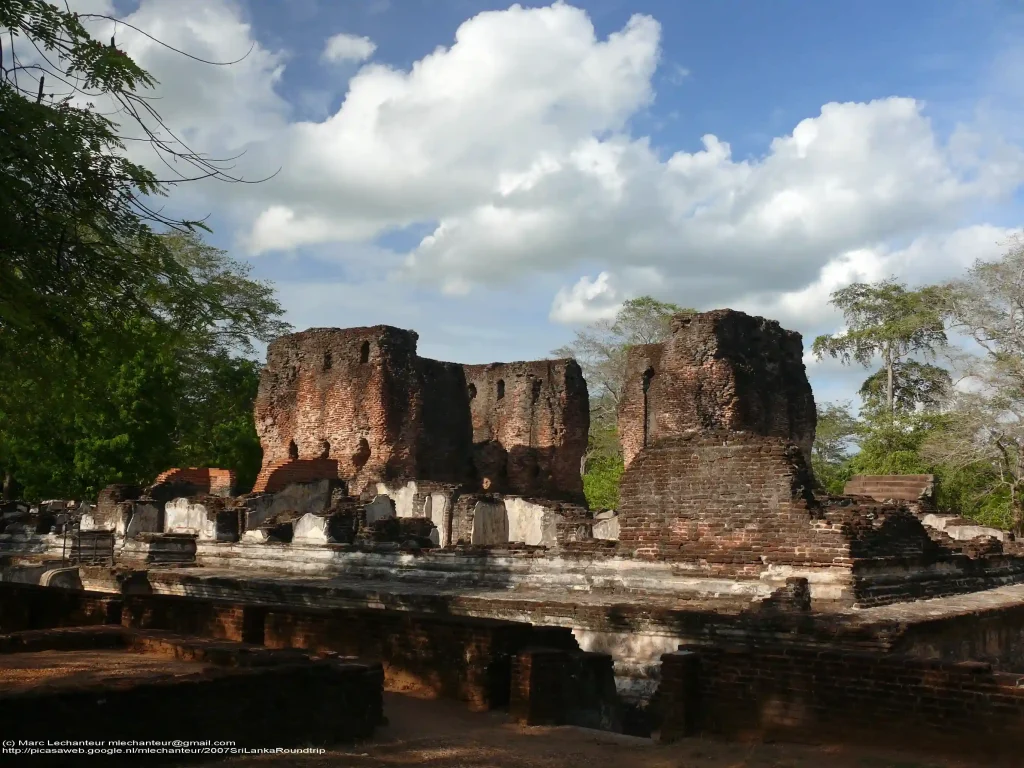
Today, the ruins of this once-great city stand as a testament to the ingenuity and skill of ancient Sri Lankan engineers and artisans. From palaces to temples, baths to reservoirs, Polonnaruwa showcases the architectural splendor of the medieval period.
Exploring Polonnaruwa – A Cycle Through History
One of the most enjoyable ways to explore Polonnaruwa is by bicycle or tuk-tuk, allowing you to navigate the ancient city at your own pace. The expansive archaeological park is scattered with historical landmarks, and cycling gives you the flexibility to move between them, enjoying the natural beauty of the surroundings as you go.
The Royal Palace and Audience Hall
At the heart of Polonnaruwa lies the majestic Royal Palace, which was once the grand residence of the kings. Although much of the palace has crumbled over the centuries, visitors can still see remnants of its grandeur, including stone foundations, pillars, and the remains of the king’s audience hall. These structures offer insight into the opulence that once marked the royal residence.
Adjacent to the Royal Palace is the Audience Hall, a hall where the king would meet with his officials and conduct important affairs of state. The stone columns and the stone-carved lotus throne still stand tall, evoking a sense of the royal court’s former majesty.
The Gal Vihara – A Sculptural Masterpiece
Perhaps one of the most famous attractions in Polonnaruwa is the Gal Vihara, a rock temple renowned for its impressive Buddha statues carved directly into the rock. This site includes four statues of Lord Buddha in different poses, including the serene reclining Buddha – an iconic and awe-inspiring sight.
The statues are known for their extraordinary detail and proportions, capturing the serene and majestic presence of Buddha. The meditation posture of the seated Buddha, the reclining Buddha, and the other forms are some of the finest examples of ancient Sri Lankan stone sculpture.
The Lankatilaka Temple – Majestic and Towering
Another highlight of Polonnaruwa is the Lankatilaka Temple, a monumental structure that towers over the cityscape. The temple is known for its massive walls, which are adorned with intricate carvings. Inside, visitors will find a towering standing Buddha statue that exudes a sense of tranquility and strength.
The Lankatilaka Temple was once an important place of worship for both the royal family and the people of Polonnaruwa. The grandeur of the temple, coupled with the serene Buddha, makes it one of the most awe-inspiring sights in the city.
Monastic Complexes and Water Reservoirs
Polonnaruwa’s engineering brilliance extends beyond its religious sites. The ancient city boasts a variety of monastic complexes, which were once centers for Buddhist learning and meditation. These include the Atadage, the Vatadage, and the Pabalu Vehera, all of which reflect the architecture and design innovations of the era.
In addition, the city is known for its water management systems, with large reservoirs and irrigation channels that were used to sustain the city’s growing population. Parakrama Samudra, a vast reservoir built by King Parakramabahu I, is an impressive feat of ancient hydraulic engineering. It covers over 2,500 hectares and is one of the largest man-made reservoirs in Sri Lanka.
The complex system of water management is also evident in the network of canals and bathing pools found in Polonnaruwa. These pools and tanks, once used for religious rituals and royal bathing, highlight the advanced understanding of water conservation and management in ancient Sri Lanka.
Ancient Tombs and Historical Sites
Polonnaruwa is also home to various tombs and memorials that further add to the intrigue of the city. Among these is the Royal Tomb, the burial site of the kings and nobles of Polonnaruwa. This site provides a glimpse into the spiritual and cultural practices of the time.
In addition to tombs, there are numerous historical inscriptions, statues, and stone carvings scattered throughout the city, all contributing to the rich cultural and historical narrative of Polonnaruwa.
Practical Tips for Visiting Polonnaruwa
- Best Time to Visit: The best time to visit Polonnaruwa is during the dry season (from May to September), when the weather is ideal for sightseeing. Mornings and late afternoons offer the best light for photography and exploring.
- How to Get There: Polonnaruwa is easily accessible from Colombo, Dambulla, and Sigiriya. It is about a 4-5 hour drive from Colombo. Public transportation options, such as buses and trains, also connect the city with major towns.
- What to Bring: Wear comfortable walking shoes, as the ruins are spread out, and there is a fair amount of walking involved. Don’t forget to bring a hat, sunscreen, and plenty of water, as the sun can be intense during midday.
Conclusion: Polonnaruwa – A Journey Through Time
Polonnaruwa is a city where history comes alive, offering visitors a chance to experience the splendor of ancient Sri Lanka. The combination of impressive ruins, majestic statues, and advanced engineering systems offers an unforgettable journey into the past. Whether you’re cycling through the ancient city, marveling at the sculptural masterpieces, or simply enjoying the serene landscapes, Polonnaruwa remains an essential destination for anyone seeking to understand the cultural and historical heart of Sri Lanka.
A visit to Polonnaruwa is not just a look at the past; it’s a chance to connect with the timeless beauty and wisdom of Sri Lanka’s ancient civilization.