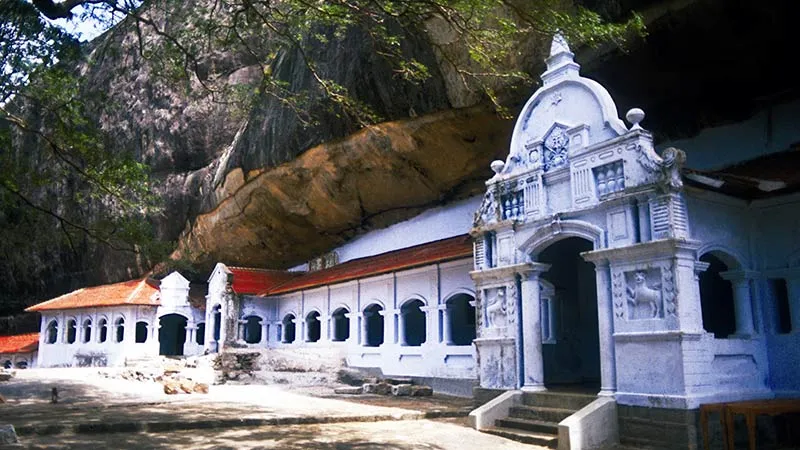
Nestled in the heart of Sri Lanka, the Dambulla Cave Temple, also known as the Golden Temple of Dambulla, stands as one of the most remarkable and well-preserved ancient temples on the island. A UNESCO World Heritage Site, the Dambulla Cave Temple complex is a stunning testament to Sri Lanka’s rich Buddhist heritage, offering visitors an unparalleled glimpse into the country’s deep religious and cultural roots. Revered as one of Sri Lanka’s most important pilgrimage sites, this temple is a must-visit for anyone interested in history, spirituality, and art.
A Unique and Ancient Temple Complex
The Dambulla Cave Temple is a sprawling complex of five caves, carved into a massive granite rock that rises 160 meters above the surrounding plains. These caves, which have been in continuous use for over 2,000 years, house over 150 Buddha statues, as well as statues of gods and goddesses, and intricate murals that decorate the walls and ceilings. The site’s historical significance can be traced back to the 1st century BC, during the reign of King Valagamba, who sought refuge in these caves when he was exiled from his kingdom. It was here that he sought solace and protection, later commissioning the creation of the cave complex as a Buddhist sanctuary.
Today, the Dambulla Cave Temple remains an important center for Buddhist worship, drawing pilgrims from across Sri Lanka and beyond. It also serves as a stunning cultural landmark and is one of the country’s most visited attractions, combining religion, history, and art in a visually and spiritually captivating way.
The Five Caves: A Treasure Trove of History and Art
Each of the five caves in the complex has its own unique character and significance. Visitors enter the caves by ascending a series of stairs, with the entrance offering a panoramic view of the surrounding lush plains and distant mountains, which adds to the serene and spiritual atmosphere.
- The Golden Buddha at the Entrance: Before entering the caves, visitors are greeted by the Golden Buddha statue, a striking 14-meter-high statue that stands at the entrance of the temple. This iconic golden statuerepresents the Buddha in a meditative pose and sets the tone for the spiritual journey that awaits inside.
- Cave 1 – The Maharaja Vihara (Great King’s Cave): The largest and most impressive of the five caves, Cave 1 houses a massive reclining Buddha statue that measures over 14 meters in length. The walls of this cave are adorned with intricate murals, depicting scenes from the Buddha’s life and important events in Buddhist mythology. The ceiling is covered in vivid paintings, some of which represent Buddhist cosmology, gods, and scenes of heaven and hell.
- Cave 2 – The Devaraja Vihara (Cave of the King of Gods): Cave 2 features a rich collection of Buddha statues in various poses, as well as murals that depict the life of the Buddha and important Buddhist stories. The famous statue of Buddha seated in a meditative position, known as the “Maha Parinibbana,” is a highlight of this cave. The murals in this cave are particularly renowned for their vibrant colors and detailed depictions of Buddhist themes.
- Cave 3 – The Dhamma Vihara (Cave of the Dharma): This cave features numerous Buddha statues, many of which are painted in bright colors. The walls are decorated with large frescoes depicting scenes of the Buddha’s life and teachings. In addition to the Buddha statues, there are statues of gods, including Vishnu and Saman, as well as the giant statue of the king who commissioned the temple.
- Cave 4 – The Pattirippuwa Vihara (Cave of the Golden Palace): Cave 4 is often referred to as the “Golden Palace” due to its elaborate decoration, including a large reclining Buddha statue. The murals here feature vivid scenes of Buddha’s journey to Nirvana, including his enlightenment and the significant events in his life.
- Cave 5 – The Vihara of the Stone Image: The smallest of the caves, Cave 5 houses an impressive Buddha statue and detailed murals depicting important moments in the Buddha’s life, such as the Buddha’s descent from heaven to preach the Dharma to his mother.
The Murals: A Masterpiece of Buddhist Art
One of the most striking features of the Dambulla Cave Temple is its stunning collection of murals. These ancient paintings, covering an area of over 2,100 square meters, are among the finest examples of Buddhist art in Sri Lanka. The murals depict a wide range of themes, including scenes from the Buddha’s life, the Jataka tales (stories about the Buddha’s previous incarnations), and various Buddhist cosmological concepts. The vibrant colors and intricate designs showcase the artistic talent and devotion of the monks and artists who created them.
The murals are not just beautiful; they also have deep symbolic and spiritual meaning, depicting the path to enlightenment and offering teachings on Buddhist philosophy. Visitors can easily spend hours marveling at the detailed artwork, each fresco telling its own story of wisdom, virtue, and the pursuit of peace.
A Spiritual Pilgrimage and Scenic Views
The Dambulla Cave Temple is not only an architectural and artistic marvel but also a deeply spiritual destination. As one of the most important Buddhist pilgrimage sites in Sri Lanka, the temple attracts thousands of pilgrims who come to pay their respects and seek blessings. The serene environment, combined with the peaceful sounds of nature and the gentle sway of trees, creates a tranquil setting for meditation and reflection.
The view from the temple is another highlight. The caves are situated on a high rock, offering panoramic vistas of the surrounding plains, lush forests, and distant mountains. It’s an awe-inspiring sight, and the climb up to the temple adds to the sense of spirituality, as it’s a journey toward enlightenment—both physically and metaphorically.
Best Time to Visit and Tips
The Dambulla Cave Temple is open year-round, and the best time to visit is during the early morning or late afternoon when the weather is cooler and the light is ideal for photography. Visitors should wear modest clothing to show respect for the religious nature of the site, and it is recommended to bring comfortable shoes for the climb.
The pilgrimage season typically runs from December to April, and visiting during this period can offer a more spiritual experience, as many local Buddhists come to the temple to mark significant religious holidays and rituals.
Conclusion: A Must-Visit Destination in Sri Lanka
The Dambulla Cave Temple is more than just a historical site—it’s a spiritual sanctuary, a stunning work of art, and a testament to Sri Lanka’s rich Buddhist heritage. The temple’s breathtaking beauty, its intricate murals, and the sense of tranquility it offers make it an unforgettable destination for visitors seeking to explore the heart of Sri Lankan culture and spirituality. Whether you’re a history enthusiast, art lover, or spiritual seeker, Dambulla is an essential stop on any Sri Lankan itinerary, offering a deeper understanding of the country’s fascinating past and vibrant present.