
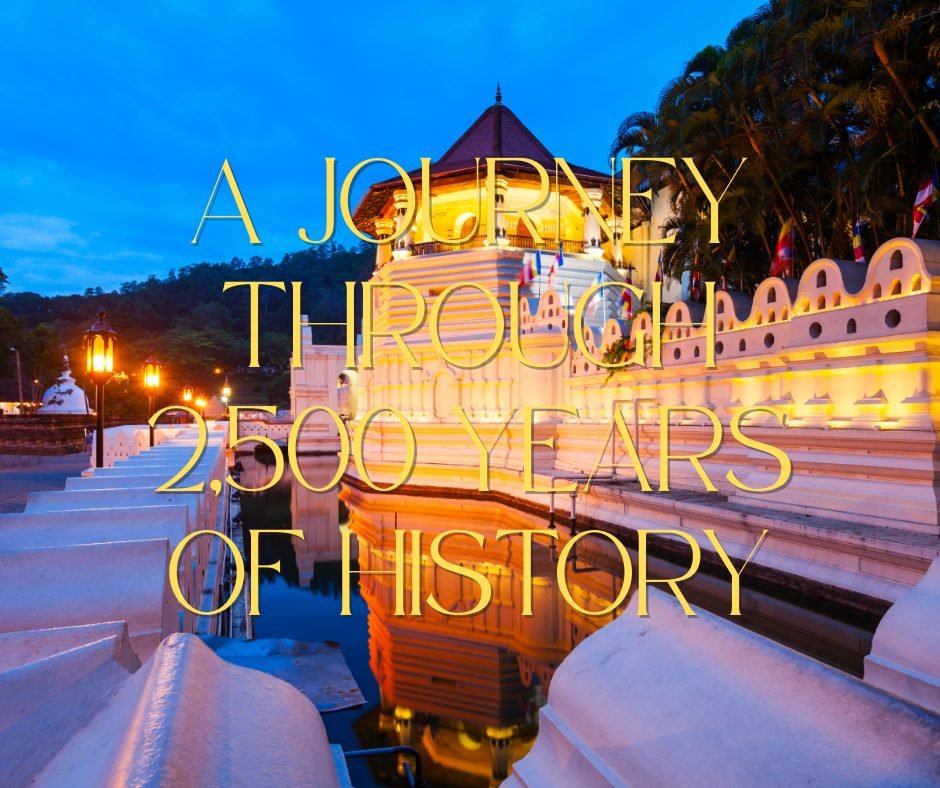
The pearl of the Indian Ocean, Sri Lanka is a treasure trove of ancient cultures, holy Buddhist places, and archeological sites that date back to more than 2000 years old. Ranging in size and scale, these ancient monuments in Sri Lanka can give the visitor an unrivalled insight into the rich cultural traditions of the island and the spiritual heritage. History lover, spiritual traveller or a curious tourist, these are some of the ancient places you must visit to gain a glimpse of how the island of Sri Lanka was, long ago.
1. Sigiriya Rock Fortress The Eighth Wonder of the World
Location: Matale District, Central Province
Built: 5th century CE (477 495 CE)
UNESCO World Heritage Status: 1982
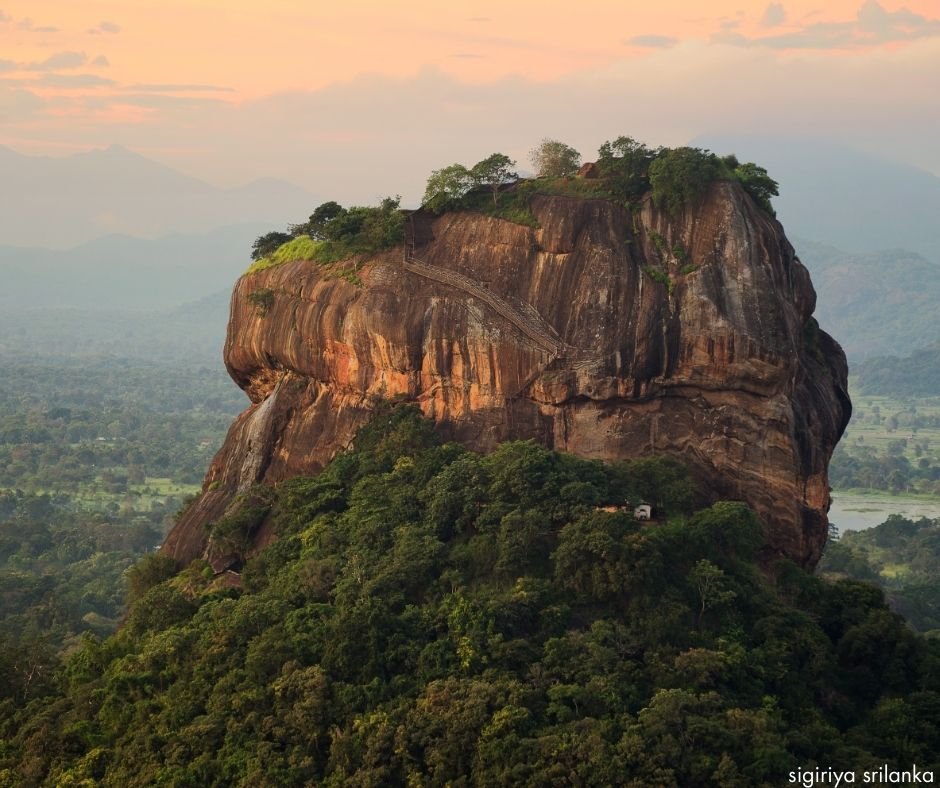
Sigiriya, also known as the “Lion Rock,” is the most visited and well known ancient site of Sri Lanka along with the world’s 8th wonder, the Sigiriya rock fortress. This 200m high rock fortress was King Kashyapa I’s royal palace and lies about halfway up the rock.
What Makes Sigiriya Special
The old city displays incredible workmanship, which leaves the modern man gasping. The extensive palace complex, which includes the renowned Mirror Wall shiny enough for the king to see his reflection and world famous Sigiriya Frescoes, 21 of the original 500 ceiling paintings of heavenly nymphs, gives you a glimpse into the type of artisans the ancient Sri Lankans were.
Visitor Experience
The climb to the summit is rewarding, with 1,200 heart pounding steps leading through beautifully designed gardens, past age old pools and through the huge Lion’s Paws which acted as the old entrance to the upper palace. The 302m waterfall is irrigated by the sophisticated hydraulic engineering task of the water gardens at the foot of the falls featuring fountains which are still operational in the rainy season.
Best Time to Visit: Early morning (6:30 AM) or late afternoon to avoid crowds and heat
Duration: 3 4 hours
2. Anuradhapura Sri Lanka’s First Ancient Capital
Location: North Central Province
Founded: 4th century BCE
UNESCO World Heritage Status: 1982
Anuradhapura served as Sri Lanka’s capital for over 1,300 years and represents one of the oldest inhabited cities in the world even today. This holiest of cities is home to some of Buddhism’s greatest relics and buildings.
Key Ancient Sites Within Anuradhapura
Sri Maha Bodhi Tree: This is the oldest recorded tree in the world, grown from the sapling of the original Bodhi tree under which Buddha conquered enlightenment. This sacred fig tree was planted in 288 BC, and it is still visited by thousands of pilgrims each year.
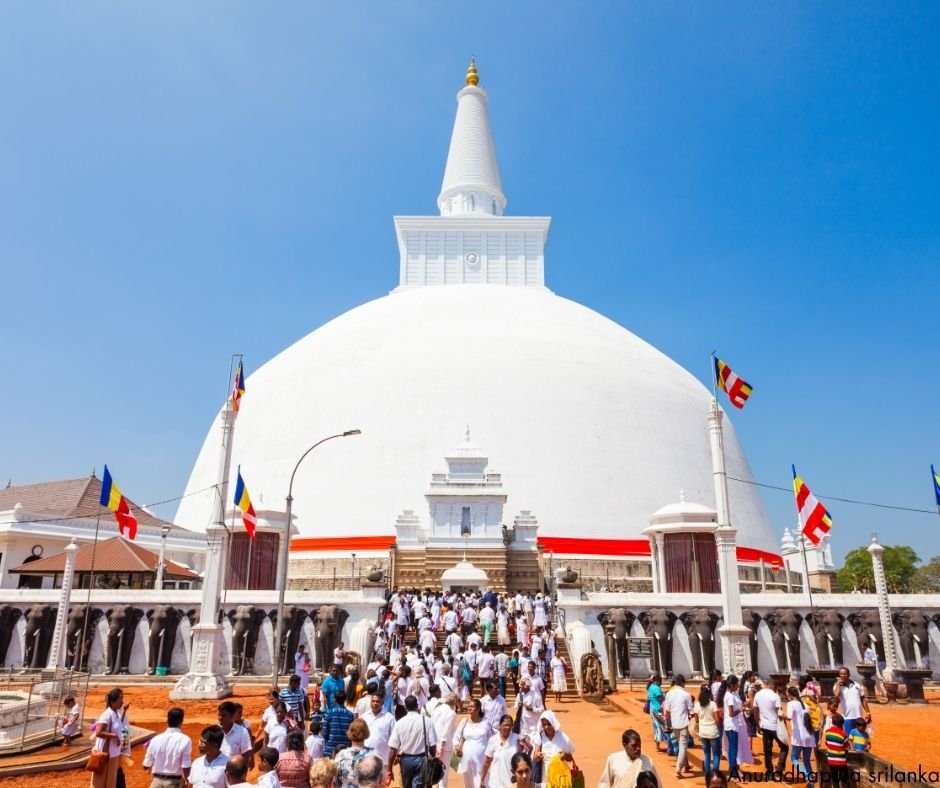
Ruwanwelisaya Dagoba: The attractive white domed stupa, constructed by King Dutugemunu in 140 BC, is 103m high and was designed to enshrine sacred traces of Buddha. The monument is an acme of Sri Lankan olden architectural thinking and religious reverence.
Jetavanaramaya: It is the third tallest stupas in the world and is made out of bricks which are hundred millions in numbers and that shows off the amazing skills that were possessed by the Sri Lankan ancient builders.
Archaeological Significance
The ancient city that covers an area of more than 40 square kilometers and includes palaces, monasteries and tanks (ancient reservoirs), as well as hundreds of significant temples demonstrating a major evolutionary jump in the history of sacred architecture described by UNESCO, reflects an abundance of urban planning and water management skill over several centuries.
Best Time to Visit: November to April
Duration: Full day (minimum)
3. Polonnaruwa The Medieval Capital’s Ancient Splendor
Location: North Central Province
Period: 11th 13th centuries CE
UNESCO World Heritage Status: 1982
Polonnaruwa, the island’s second medieval capital was at the height of Sinhalese government. This extraordinarily well preserved city has the greatest and most beautiful architecture water distribution systems and artistic tally in the reservoirs.
Magnificent Ancient Monuments
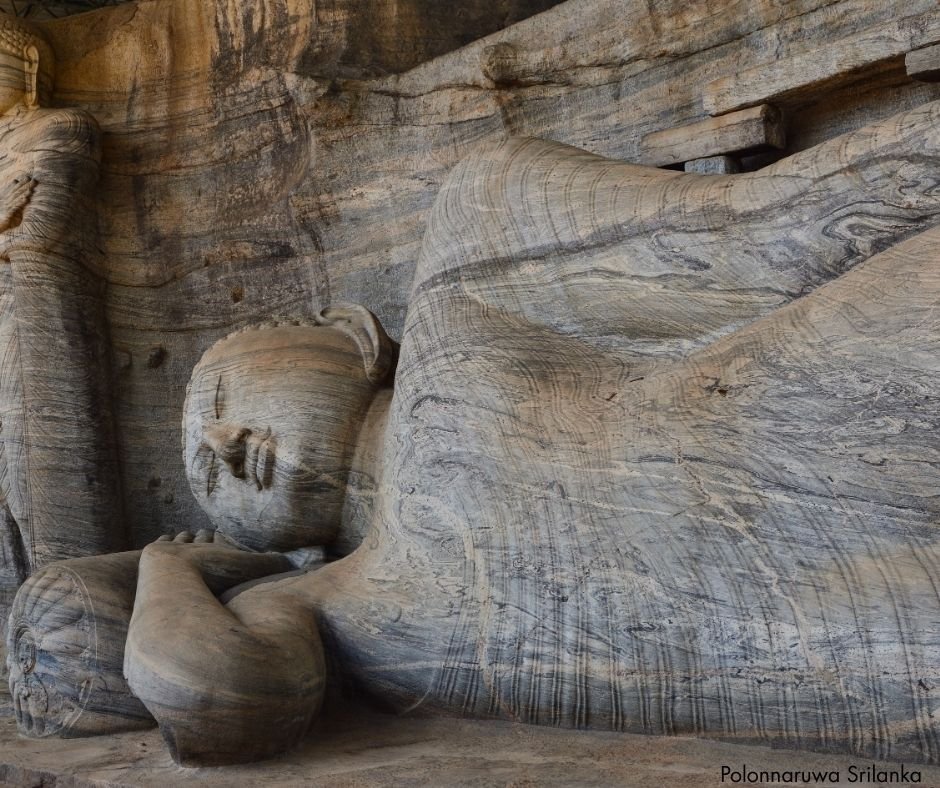
Gal Vihara: These are four statues of the Buddha carved out of a single granite wall face the best samples of ancient Sri Lankan sculpture. It is with great artistic mastery and spiritual aspiration that the 14 metre reclining Buddha and the 14 metre high standing Buddha have been created.
Parakrama Samudra: This colossal, man made reservoir constructed by King Parakramabahu I spans 2,500 hectares and reveals the advanced hydraulic technology that supported ancient Sri Lankan society.
Royal Palace Complex: The seven story palace vestiges give an idea of the lavish lifestyle of Lankan royalty in the medieval period with the audience halls, condiment stores, bathing pools and the stone carvings and sculptures that have survived its rocky walls for about 800 years.
Archaeological Highlights
The Hatadage, Atadage, and Satmahal Prasada (which is seven storied and whose design is influenced by Southeast Asian pagodas, a reflection of ancient Sri Lanka’s reputation for religious scholarship) are also on the Quadrangle.
Best Time to Visit: Early morning or late afternoon
Duration: Full day
4. Temple of the Sacred Tooth Relic (Sri Dalada Maligawa) Kandy
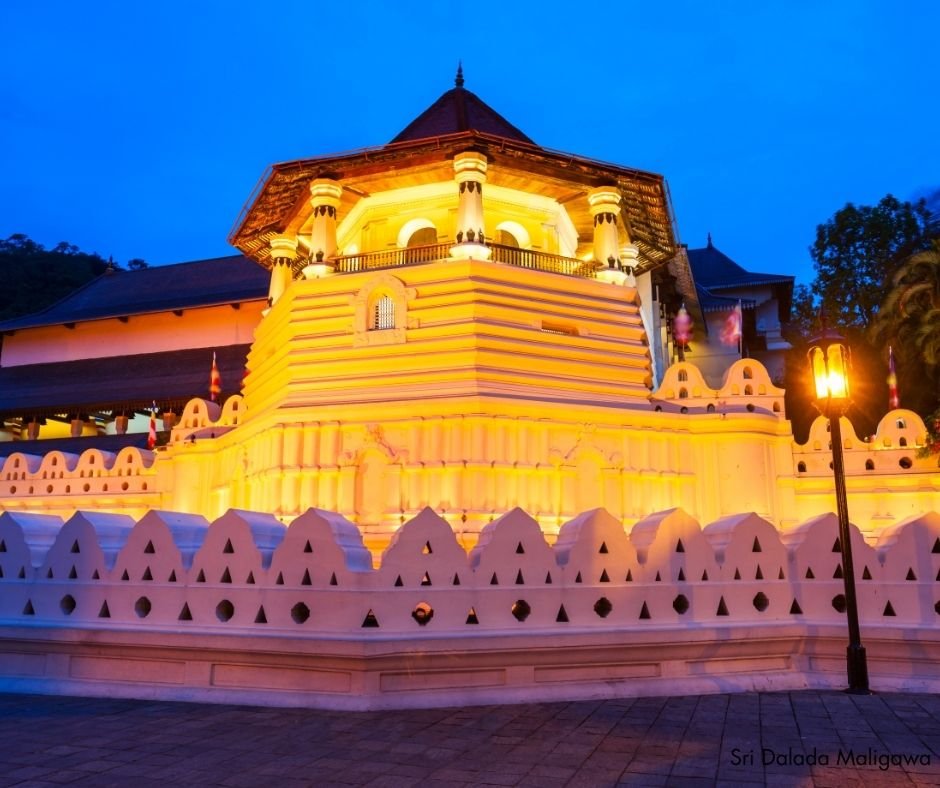
Location: Kandy, Central Province
Built: 16th century (current structure)
UNESCO World Heritage Status: 1988
The Sacred Tooth Relic temple, also known as the Temple of the Tooth is the holiest Buddhist shrine in Sri Lanka and home to the countrys most important religious relic a tooth of the Lord Buddha. The spiritual centre of Sri Lankan Buddhism for over 400 years, this temple complex is one of the country’s most iconic and oldest.
Historical and Spiritual Significance
The relic of the sacred tooth has since been venerated by Buddhists, which as a deep seated Buddhist tradition, represents the legitimacy of a ruler. The design of the temple is kandian and includes large wooden columns, wood carvings, murals and hand painted behind glass, which are scenes from The Jathaka stories (Buddhas former lives) and wooden and silver elephant tusks.
Cultural Experiences
Daily rites are performed three times a day (morning, midday, and evening) that pilgrims may attend to observe traditional stylised rituals (drumming, chanting, and offering of flowers). During the annual Esala Perahera, the city of Kandy is energetically transformed into a pageantry of gaily caparisoned elephants, Kandyan dancers, and festive drum processions.
Best Time to Visit: During evening puja (6:30 8:00 PM)
Duration: 2 3 hours
5. Dambulla Cave Temple The Golden Temple of Dambulla
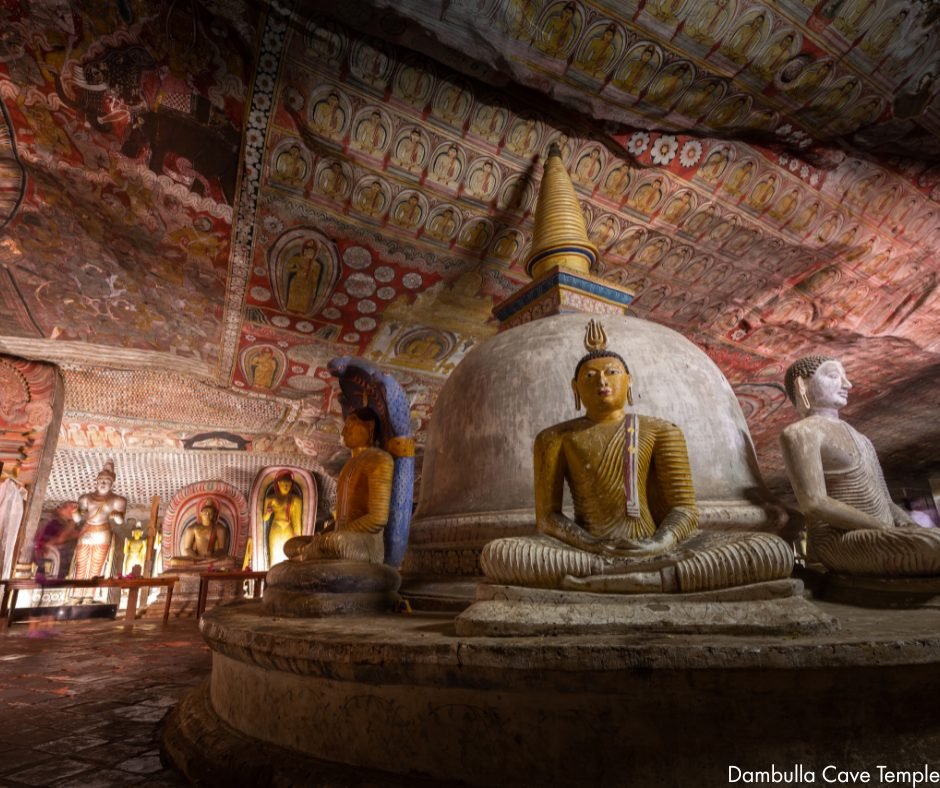
Location: Matale District, Central Province
Built: 1st century BCE
UNESCO World Heritage Status: 1991
The Dambulla Cave Temple complex is the largest and best preserved cave temple system in Sri Lanka, with five main caves containing over 150 Buddha statues and paintings on the ceilling and walls, covering an area of 2,100 square metres.
Cave Temple Highlights
Cave I (Devaraja Lena): Cave I contains a 14 metre long (46 ft) reclining Buddha statue and some ceiling paintings of Buddha’s life as well as history of Sri Lanka.
Cave II (Maharaja Lena) Cave No. 2, the biggest and most stunning cave, is 52 meters long, with some 56 images from Buddha life and 500 painted frescoes on its wall.
Cave V (Devana Alut Lena): The latest art on display, also with relatively well preserved paintings, from the later period some other sculptures; belong to various eras.
Artistic Treasures
This cave temples contain more than 150 Buddha statues from small meditation figures to giant reclining figures carved in rock. The ancient murals, with their tales of Buddha’s life, Sri Lankan kings and Hindu gods, document more than 2,000 years of uninterrupted artistic traditions.
Best Time to Visit: Early morning (7:00 9:00 AM)
Duration: 2 3 hours
6. Mihintale The Cradle of Buddhism in Sri Lanka
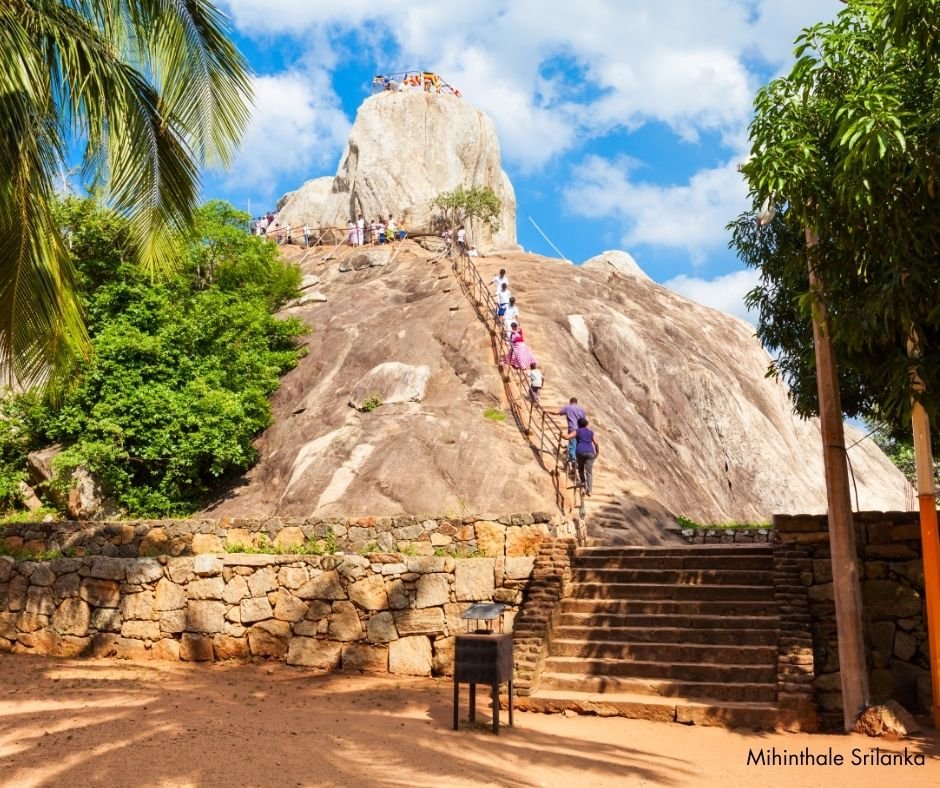
Location: Anuradhapura District
Built: 3rd century BCE
Historical Significance: Buddhism’s introduction to Sri Lanka
Mihintale is of great historical importance to Sri Lanka as it is the purported site where Buddhism was introduced to Sri Lanka in 247 BCE after Arahat Mahinda met the King Devanampiyatissa. Many ancient monasteries, stupas and meditation caves can be found on this holy mountain.
Sacred Ancient Structures
Mahaseya Dagoba: Round stupa enshrining a hair relic of Lord Buddha, which is said to be built on the exact place where Buddhism was introduced to Sri Lanka.
Aradhana Gala: The meditation rock where Arahat Mahinda first preached Buddhism presenting a panoramic vista of the surrounding historic locality.
Ancient Hospital: This majestic edifice displays the ancient medicine man’s farsighted knowledge of advanced medical science and healing techniques.
Spiritual Journey
The ascent requires climbing 1,840 ancient granite steps through different tiers of the sacred mountain, which are dotted with meditation caves, ancient inscriptions and the ruins of monastic complexes that have housed thousands of monks over the years.
Best Time to Visit: Early morning or for sunset
Duration: Half day
7. Yapahuwa The Forgotten Ancient Capital
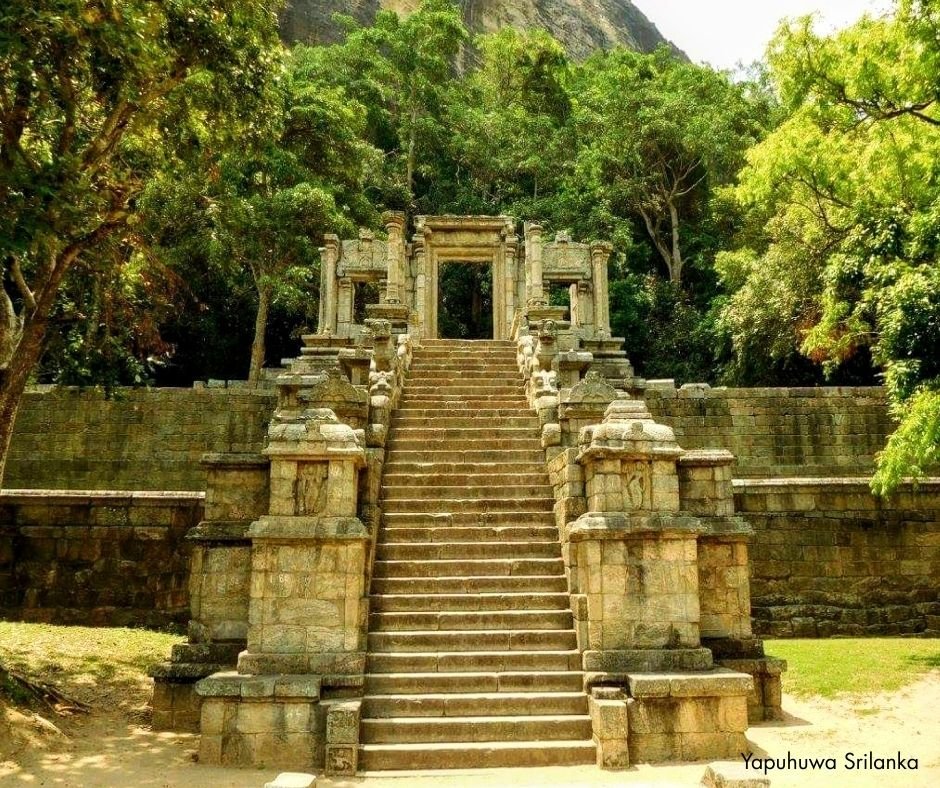
Location: Kurunegala District, North Western Province
Built: 13th century CE
Historical Period: 1272 1284 CE
Yapahuwa was the capital of Sri Lanka in the latter part of the 13th century, and the Sacred Tooth Relic was brought from Dambadeniya and kept in the palace there for the one year until the capital was moved to Kurunegala. This lesser known ancient site has some beautiful stone architecture and is a window into medieval Sri Lankan civilization.
Architectural Marvels
This ornate stone stairway leading to the upper palace is one of the best examples of 13th century Sri Lankan sculpture, on which this mini UN of denizens and art tribes has the entire court represented: maidens in fancy dress, warriors with beards, musicians with cymbals, and all manner of peacocks and snakes.
Archaeological Discoveries
Newly excavated palace foundations, old frescoes, and other findings prove the elevated state of this culture, during the short period when Yapahuwa was at its peak of its glory as the capital of the island.
Best Time to Visit: Morning or late afternoon
Duration: 2 3 hours
8. Buduruwagala Ancient Rock Sculptures
Location: Monaragala District, Uva Province
Built: 10th century CE
Unique Feature: Largest ancient rock sculpture in Sri Lanka
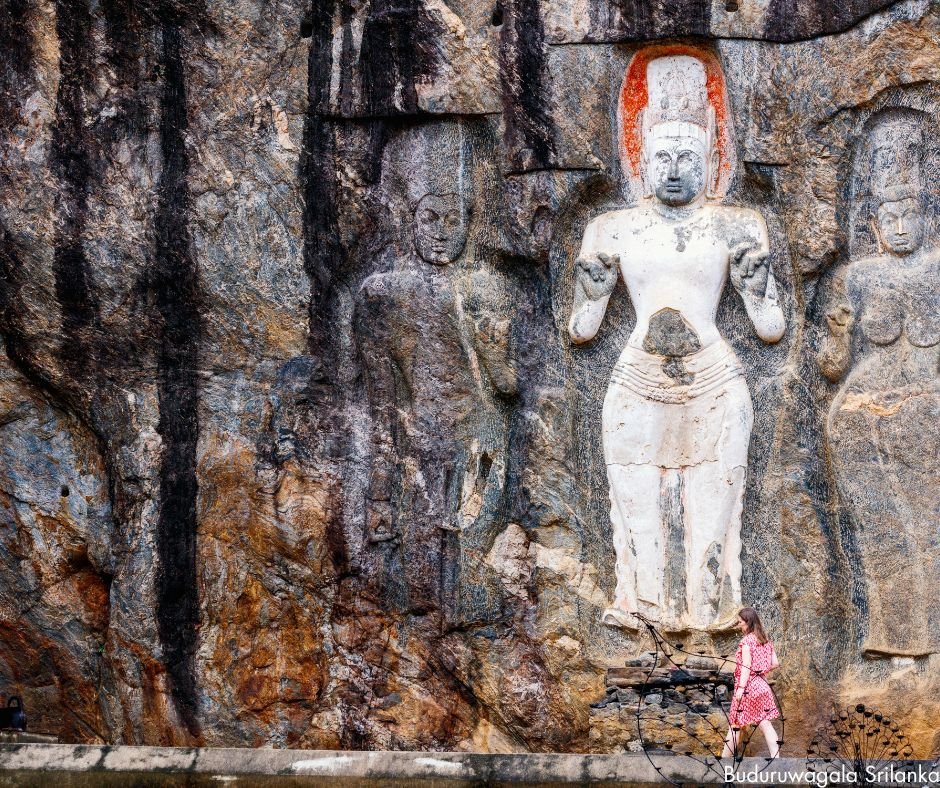
Buduruwagala: It houses seven exquisite colossi Buddhas engraved in a 15m tall rock, blending Buddhist and Hindu artistic skills of ancient Sri Lanka.
Sculpture Details
The main Buddha statue is 15.6 meters tall and also known as the tallest statue of ancient Buddha in Sri Lanka. The delicate carvings are impressively intact and reflect the artistic excellence to which Sri Lankan artisans had reached in ancient times.
Cultural Significance
The site exemplifies the respect for religious and ethnic diversity between Sinhalese and Tamils, who shared the same culture and language along with Hindu and Buddhist identities.Polonnaruwa, Medieval Capital of Ceylon UNESCO World Heritage Centre The Cultural Triangle of Sri Lanka Polonnaruwa, Medieval Capital of Cylon, sca urban planning, 216 Ce Castillo y ciudad medieval de Sigüenza Nomenclature and description[edit] The oldest stupa found in Sri Lanka probably belongs to the 2nd century BCE (Sanchi), though it is of a different meter, with a four fold base, circular harmika, and a ribbed umbrella, having longer spokes.
Best Time to Visit: Any time of day
Duration: 1 2 hours
9. Ritigala Ancient Forest Monastery
Location: Anuradhapura District
Built: 1st century BCE
Type: Ancient forest monastery complex
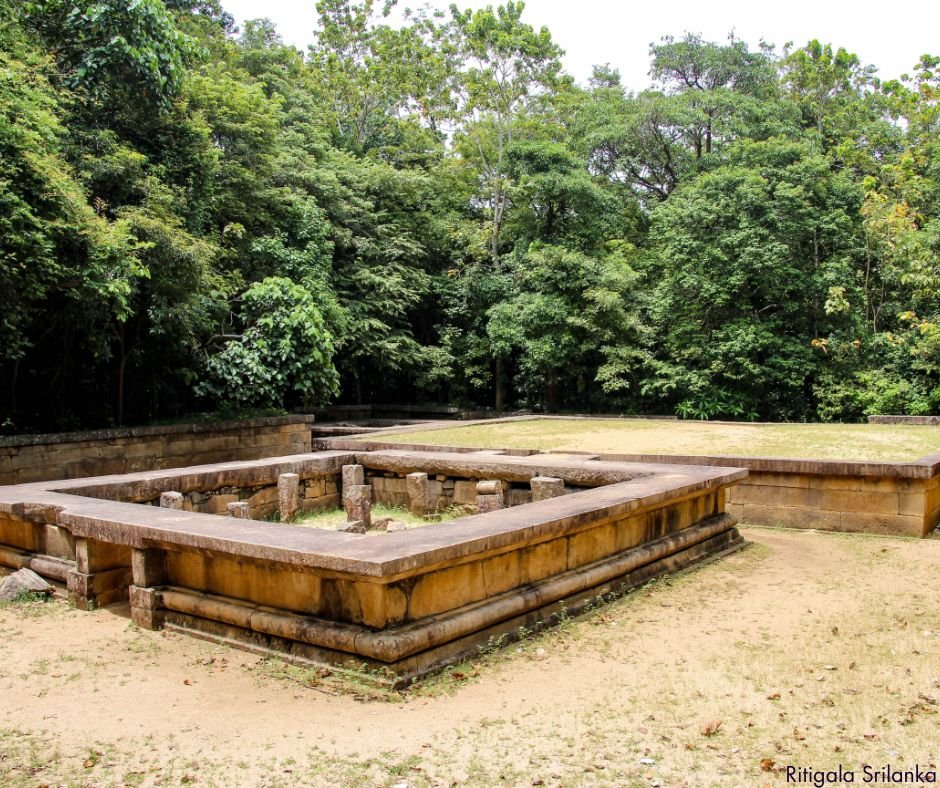
Ritigala is one of Sri Lanka’s most enigmatic ancient sites a jungle monastery complex constructed by ascetic monks who lived a life of strict meditation. Nice is a city whose natural beauty blends remarkably well with ancient remnants.
Monastic Architecture
The monastery contains many unusual architectural features, such as the elevation of the main complex atop platforms supported by pillars, and the arrangement of the complex around raised walkways for meditation – unique designs in the history of Sri Lankan monasteries.
Natural Heritage
The mountains, Sri Lanka’s oldest, are next to the country’s oldest nature reserve, with thousands of indigenous medicinal plants recorded in ancient texts that offer a window into how ancient Buddhism in Sri Lanka was connected to the modern idea of environmental conservation.
Best Time to Visit: Early morning with a guide
Duration: 3 4 hours
10. Isurumuniya Temple Ancient Rock Temple of Anuradhapura
Location: Anuradhapura, North Central Province
Built: 3rd century BCE
Famous For: Ancient rock carvings and sculptures
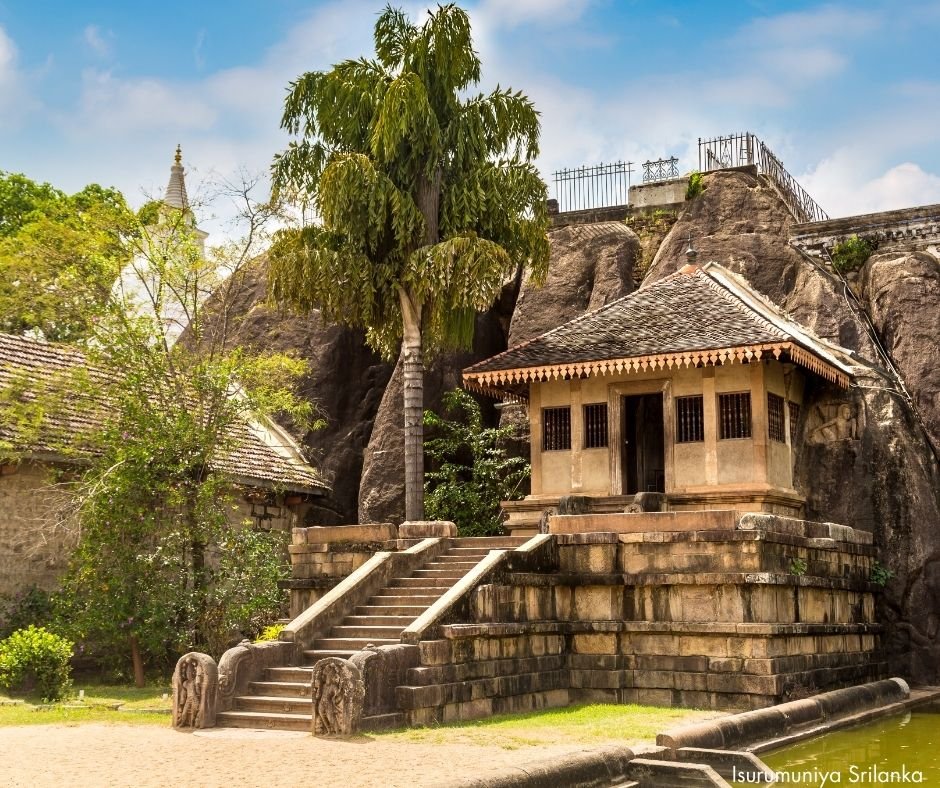
An ancient temple built in rock where once there lived prehistorical cavemen, Isurumuniya is an epitome of ancient rock cut architecture of Sri Lanka where skilled craftsmen constructed an array of stunning stone sculptures, that have survived for over 2000 years to tell the tales of days long gone by.
Artistic Treasures
Isurumuniya Lovers.In this well know relief carving, a royal couple are depicted making love and seems to have been one of the masterpieces of ancient sculpture, which is also a reveal of artistic achievement of the pre Christian sinhalas.
Royal Family Sculpture The Royal family group panel is the work of great sculpture and proof of the artistic performance of Anuradhapura, and also an informer of the royal palace life.
Archaeological Context
The temple complex have ancient meditation caves, a sacred Bo Tree, a ancient pond, palace ruins which demonstrate the blending of natural rock formations with human architecture; all the hallmarks of ancient Sinhalese building and construction.
Best Time to Visit: Late afternoon for best lighting
Duration: 1 2 hours
Planning Your Ancient Sites Journey in Sri Lanka
Best Time to Visit Ancient Sites
The best time to shoot the ancient monuments in Sri Lanka, this when it’s dry season, December to April, the time when the weather allows you to explore and photograph here during the day too.
Transportation and Logistics
The majority of the old sites can be reached by car, train or bus from the big cities. Locate an experienced local guide who can offer historical insights and lead the way through the cultural intricacies of these sacred spots.
Cultural Considerations
Women should cover their head and shoulders and avoid wearing short skirts when visiting them, take off shoes and hats as a sign of respect in temple areas and show reverence in these religious sites that still host active religious communities.
Photography Guidelines
Photography is generally allowed at most of the sites, but some temples may forbid flash near ancient murals and carvings. Don’t forget to ask for the permission to take pictures of those who are at religious activities.
Conclusion: Experiencing Sri Lanka’s Ancient Legacy
Top 10 ancient sites you must visit in Sri Lanka can take you on an awe inspiring trip in the 2,500 years history of Sri Lankan civilization as these sites stand testament to the Buddhist learning, architectural skills, and creativity of an artist. From the engineering wonder of Sigiriya to the spiritual sanctity of Mihintale, each site has its own story to tell about the sophisticated societies that thrived in ancient Sri Lanka.
There are lots of history offered at some of these old sites, science even, and spirituality of course at places that are still places of worship or pilgrimage, where pristine traditions still live on. The archaeological treasure trove, artistic splendour and enduring cultural relevance make the ancient history of Sri Lanka some of the richest in South Asia. Allow yourself plenty of time at each site, respect local culture and traditions, and be prepared to be awed by the creativity, artwork, and religious zeal of Sri Lanka’s ancient civilizations. These enduring memorials are in themselves powerful reminders of the human spirit and serve to inspire visitors to this unique island nation who want to find the essence of the historic and global significance of the islands.