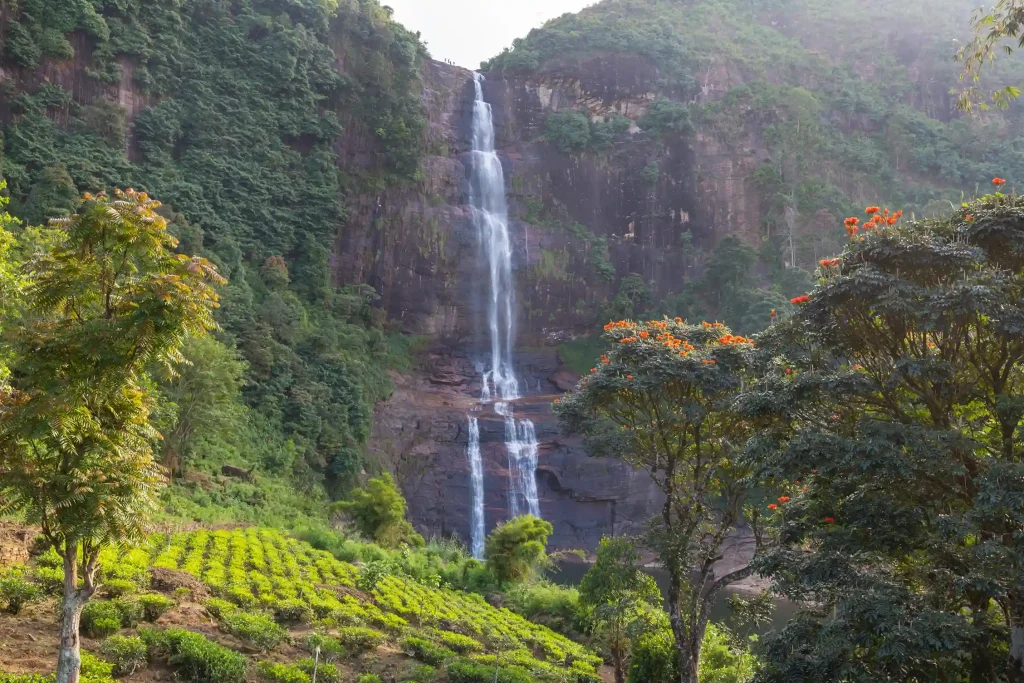
Sri Lanka’s natural beauty is celebrated not only for its pristine beaches and wildlife but also for its breathtaking waterfalls and lush tea plantations. The country’s central highlands offer a cool, temperate climate, which creates the ideal environment for these two picturesque landscapes. As you venture into the heart of the island, the cascading waterfalls and mist-covered tea fields provide a serene escape, allowing visitors to connect with nature while experiencing the charm and tranquility of rural Sri Lanka.
Ravana Falls & Diyaluma Falls: Majestic Waterfalls Amidst Lush Greenery
Sri Lanka is home to some of the most stunning waterfalls in Asia, and Ravana Falls and Diyaluma Falls are two of the most popular and picturesque waterfalls on the island.
Ravana Falls: A Hidden Gem in Ella
Located near the town of Ella in the central highlands, Ravana Falls is one of the largest and most beautiful waterfalls in Sri Lanka. Named after the legendary king Ravana from the ancient Indian epic, the Ramayana, the waterfall has a mythical significance, said to be the place where Ravana hid Sita. The falls cascade down a 25-meter drop, surrounded by lush greenery and tropical flora. The site offers a peaceful retreat, making it an ideal spot for nature lovers, photographers, and those seeking a quiet moment in nature.
- Activities: Visitors can trek through the nearby jungle to reach the falls, enjoy the scenic views from various vantage points, and take a refreshing dip in the cool, clear waters below. The surrounding landscape of dense forests and rocky outcrops adds to the natural charm of the location.
- Best Time to Visit: The monsoon season can bring heavy rains, so it’s best to visit the falls during the dry months between December and April for optimal conditions.
Diyaluma Falls: Sri Lanka’s Second Tallest Waterfall
Another gem in Sri Lanka’s waterfall collection is Diyaluma Falls, located near the town of Koslanda. Standing at an impressive 220 meters, Diyaluma is Sri Lanka’s second tallest waterfall. The falls create a dramatic, multi-tiered cascade that flows down the mountain and into the river below, forming stunning natural pools along the way. The waterfall is particularly captivating in the early morning light, with mist rising off the water and surrounding hills.
- Activities: A hike to Diyaluma Falls is an adventurous journey, as it requires trekking through rugged terrain to reach the waterfall’s top, where visitors can enjoy a spectacular view of the surrounding landscape. At the base of the falls, visitors can swim in the natural pools or simply relax in the peaceful setting, surrounded by the sounds of flowing water and birdsong.
- Best Time to Visit: Like Ravana Falls, the best time to visit Diyaluma is between December and April, when the weather is most favorable for hiking and outdoor activities.
Tea Plantations of Nuwara Eliya & Ella: A Journey Through the Misty Hills
Sri Lanka is globally renowned for its Ceylon tea, and the tea plantations in the central highlands of Nuwara Eliya and Ella provide a scenic backdrop that draws tea enthusiasts and travelers from around the world. The cool climate, fertile soil, and misty atmosphere of these areas create the perfect conditions for growing high-quality tea, making the region one of the world’s top producers of this beloved beverage.
Nuwara Eliya: The “Little England” of Sri Lanka
Nuwara Eliya, often called “Little England” due to its colonial-style architecture and cool climate, is one of the most charming hill stations in Sri Lanka. The town is surrounded by picturesque tea estates that stretch across the rolling hills, providing a spectacular visual feast of lush greenery and sweeping vistas.
- Tea Factory Tours: A visit to Nuwara Eliya is incomplete without exploring its tea factories. Pedro Tea Estateand Labookellie Tea Factory are among the most famous, where visitors can see the traditional tea-making process, from plucking to processing, and enjoy a fresh cup of Ceylon tea. The guided tours are an excellent opportunity to learn about the history of Sri Lankan tea production and its cultural significance.
- Strolls Through Tea Fields: The tea plantations in Nuwara Eliya are perfect for leisurely walks. The fields are neatly laid out in terraced rows, and visitors can wander through the green hills, taking in the beautiful scenery and inhaling the fragrant scent of fresh tea leaves.
Ella: A Tea Lover’s Paradise in the Highlands
Ella, another picturesque town in Sri Lanka’s central highlands, is known for its breathtaking views of rolling hills covered in tea plantations. The town’s laid-back atmosphere and cooler climate make it a perfect destination for tea lovers.
- Tea Plantation Walks: Ella offers visitors the chance to explore the lush tea estates on foot. The walk through the plantations provides a glimpse into the life of the tea pluckers who work on the estates and offers stunning views of the surrounding mountains. For a unique experience, visitors can take a train ride from Kandy to Ella, passing through tea plantations and rolling hills.
- Visit to the Tea Factories: Ella also boasts several tea factories, where visitors can tour the production facilities and witness the traditional methods of producing Ceylon tea. After the tour, enjoy a cup of freshly brewed tea while overlooking the verdant landscape.
Madu Ganga River Safari: A Mangrove Wonderland
In addition to its stunning waterfalls and tea plantations, Sri Lanka offers another spectacular natural experience: the Madu Ganga River. Located in the southwestern region of the island, near Balapitiya, Madu Ganga is one of the largest estuaries in Sri Lanka, home to a maze of islands, lush mangrove forests, and rich biodiversity.
Mangrove Safari
A Madu Ganga River Safari provides an unforgettable way to experience the natural beauty of Sri Lanka. The river is teeming with wildlife, from exotic birds like the kingfisher and egret to monkeys, crocodiles, and various species of fish. Visitors can explore the river on traditional boats, navigating through the mangrove ecosystems that thrive along its banks.
- Mangrove Ecosystem: The river’s mangrove forests are crucial for the health of the local ecosystem, providing a habitat for numerous species of plants and animals. The safari offers a serene journey through these lush forests, where you can spot various wildlife and learn about the importance of mangrove conservation.
- Island Temples and Cinnamon Plantations: During the safari, visitors can stop at the small islands along the river to visit ancient Buddhist temples or learn about the production of cinnamon, Sri Lanka’s prized spice. The riverbanks are dotted with cinnamon plantations, where the harvesting process is still done traditionally.
- Best Time to Visit: The Madu Ganga River safari is best enjoyed during the dry months, from December to April, when the weather is ideal for boating and exploring the mangrove forests.